


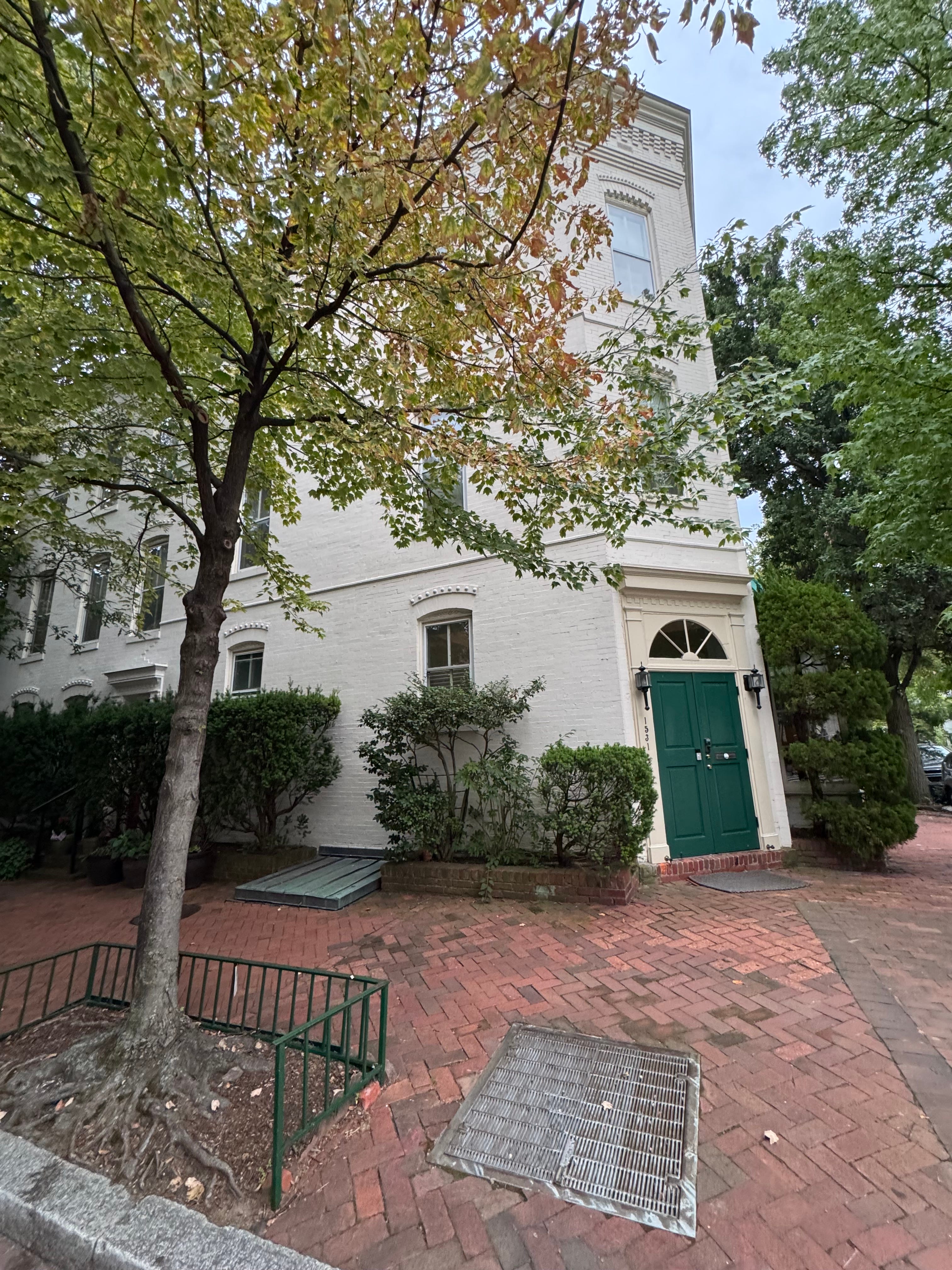
His shop was unmarked. For a long time, no sign announced what those dark green doors led to. It sat at a corner on a tree-lined Georgetown street in Washington, D.C. Expensive homes surrounded that door. Statesmen, actors, diplomats. An occasional scientist, important in their day, now old, would wander in. Nobel prize winners stopped by. I knew who none of these men were, but John did.
Outside, a barred window held books, but that was all. The books were hard to see through thick white-painted bars without feeling as if you were peering too intently into someone’s living room. A bowl of water was reliably beside the closed door for neighborhood dogs when John was in the shop. He always had treats for them, sorted by size, inside. Of course.
It was a shop, this space. Not new and modern, but old and worn, full of antiquarian and rare science and math books, maybe leather, maybe dusty. Two rooms connected by a thin hall full of books, making people walk sideways through it. Specialized. Not for the passerby, but for someone on a search for the first time an influential scientific formula appeared in print. That kind of thing.
I was in awe of his knowledge. It was so far removed from mine. I sat sometimes in the shop behind his large wooden desk, its top piled with notes and books, and listened. I would later go with him to one math “expo” to play Vanna White in his “booth,” which drew so many visitors because it looked like an old European bookshop, not a shiny, manufactured cube. It stood out. He stood out. I learned to fake knowing whether we had any Dirac. I met Chandrasekhar and loved pronouncing his name. I heard scientists read their poetry, which sounded like hell when I was invited, but was actually quite lovely.
In his shop, scientists and mathematicians felt sure and celebrated. Random people off the street, not so much. One man came in, looked around a while, then asked if the books were for sale, or if it was the bookshelves he was selling.
I finally commissioned a sign painter to make him a sign. We hung it over the door. It was thin and long. Dark green, black, and gold. Stately, even. I doubt anyone ever paid attention to it, but I did.
When old men came in and stood a long time in front of the physics section, John would inevitably wander over and ask what they were doing in 1942. Long conversations ensued. Now he is older than those old men.
Once, he tried to correct Murray Gell-Mann on how to pronounce "quark." He knew Gell-Mann’s name, of course—the theoretical physicist who introduced quarks as the building blocks of matter, the man who coined the word itself. He just didn't recognize the face standing in his shop until it was too late. To be fair, the pronunciation was contested—Gell-Mann himself pronounced it against the rhyme of the Joyce line he'd taken it from in Finnegans Wake.
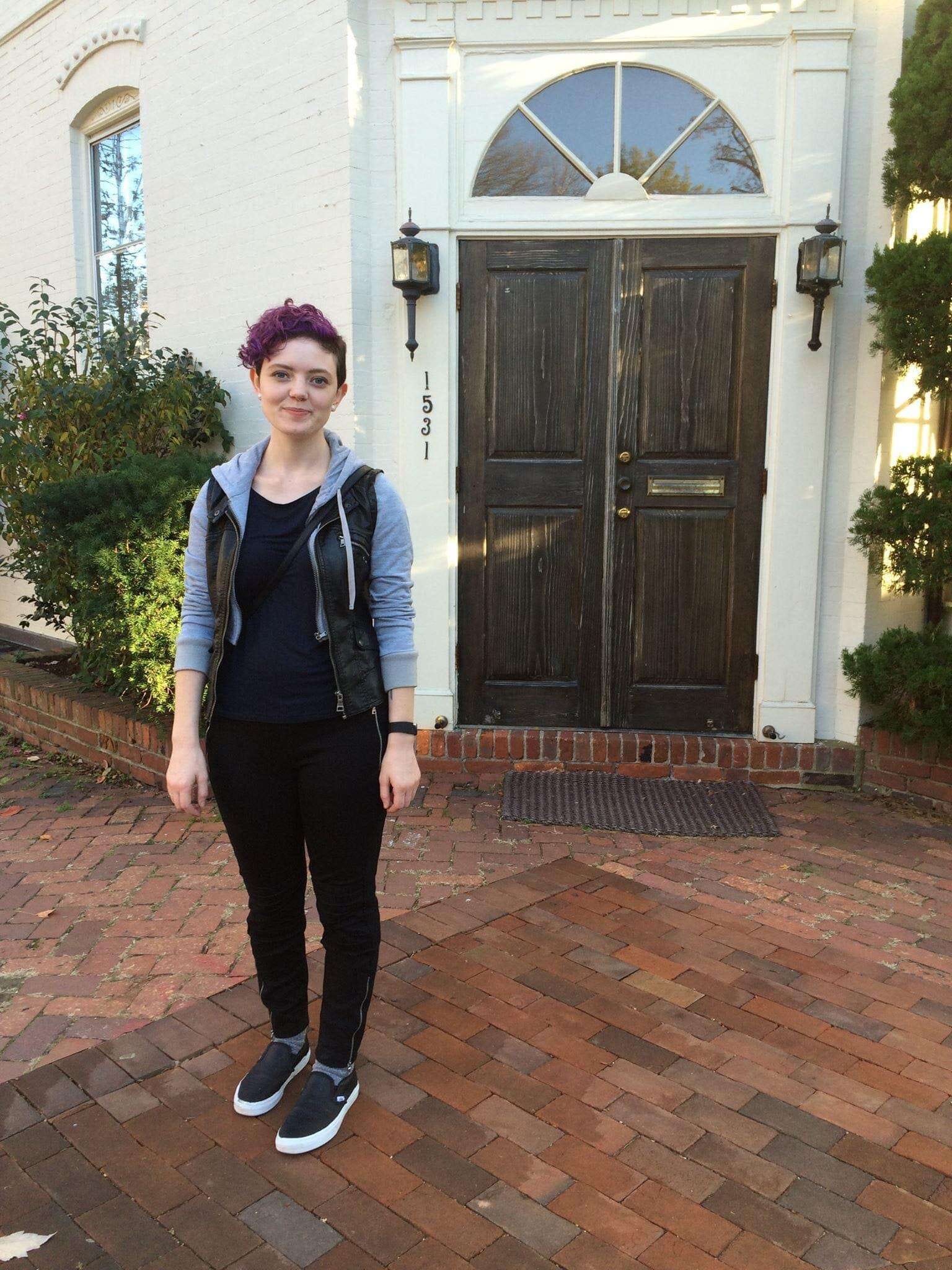
People who visit D.C. even now often stop by the shop to pay their respects to what was there for so long. They text us photos. They sometimes serendipitously meet his landlord outside on the corner, a diplomat who still lives above it. He and John always called each other by their last names; getting familiar with such a distinguished man felt uncomfortable for both of them. For decades, it was always Mr. Ptak and Mr. Wendt. It still is.

Emma spent a lot of time as a baby in her old-fashioned Emmaljunga stroller beside his desk. A quiet baby, she held up one fist and marveled at it for hours. Then switched fists. She later went to the Montessori school in a stone church just down the street. John was her person.
The shop smelled like old books, leather, and Fahrenheit cologne, a dizzying mixture that always takes me right back there. That mixture of scents led my friend Gay to announce very clearly and succinctly that John was a man to leave your husband for. She was right, as she often was.
His shop was featured years ago in the Washington Post, where John was described as “as thick and sturdy as a textbook.” And he is.
“Not many people ever seem to be inside, which is fortunate, since there's hardly any room to maneuver amid the clutter of books, maps, journals, lithographs, laboratory gadgets, test tubes, thermometers and fossils.” It goes further: “In a glass case is a wax model of the interior of a lung. This is information of sorts, in a particularly visceral form. Look closely at that blob floating in formaldehyde: It’s the larynx of an owl. The proprietor, John Ptak, is as thick and sturdy as a textbook. From the look of his shop, he’s more collector than salesman. In Alexandria he has a storage facility so packed with books it is impenetrable, essentially a solid cube of paper.”
John never did suffer fools gladly. An interior decorator who wandered in to find 20 feet of old red leather books for a client’s new library in Georgetown was sent on his way summarily, even though we really could have used that money as new parents. These were important books, not decorations. I always loved him for that.
A bookshop from the West Coast bought the bottom half of his large stock years ago to open their own science and math outpost. They bought bound books and left scientific pamphlets, papers, and prints, along with the most important books, now housed in a building as large as our house, just down the hill on our property. People don’t stop by anymore, but John still works every day, cataloging, researching, finding, noticing, cross-referencing, and selling online to people who know. Collectors, libraries, all over the world.
No sign was ever needed.

What a great story - I always wondered what happened to his shop!
I remember reading about his shop ages ago. Who knew that years later, I would be scouring shelves in any used bookstore I could find for older physics books for my son (who is now very interested in theoretical physics and math). Such valuable tools were/are in the hands of the best (Mr. Ptak). Another delight for another day. Thank you, Amazing Patti!