

They were told, in a hundred ways—by law, by silence, by violence, by erasure—that they should not exist, or should exist only quietly, only partially, only in the margins. They burned brightly anyway.
This June, I’m spending thirty days with thirty queer writers, artists, scientists, musicians, and activists whose lives and work changed something in the world. Some you’ll know. Some you won’t. All of them were on fire, on purpose.
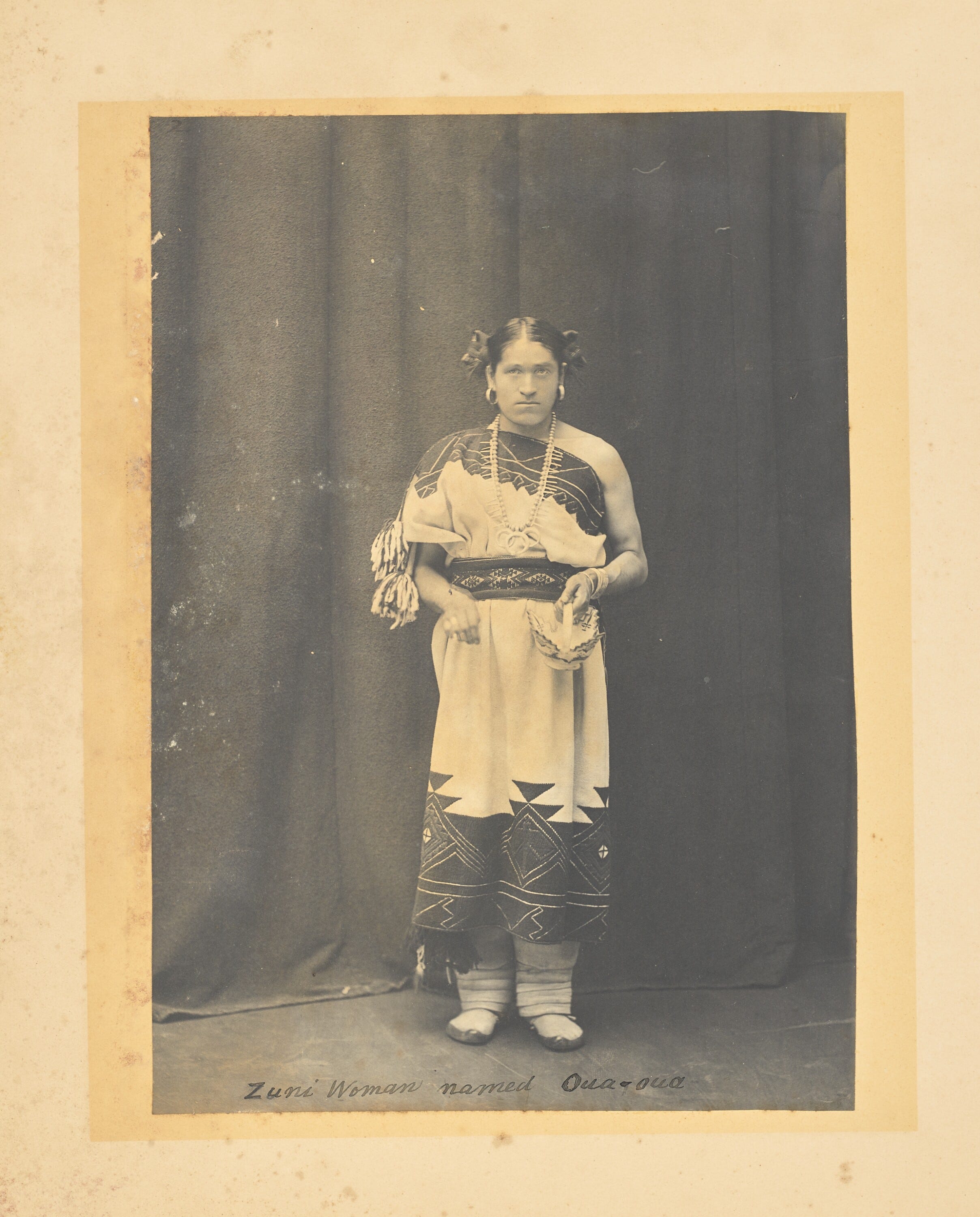
I was introduced to We’wha by a Google Doodle in 2021.
We’wha (1849-1896), born in what is today New Mexico, was a cultural ambassador, spiritual leader, and expert craftsperson who helped preserve the history, traditions, and knowledge of the A:Shiwi (Zuni) people, leaving a profound legacy spanning cultural preservation, diplomacy, and LGBTQ+ representation.
We’wha is also sometimes spelled as We:wa. Both are pronounced, “WAY-wah.” They are referred to by male pronouns, female pronouns, and they/them pronouns in literature about them. I have used they/them pronouns in this essay.
We’wha was orphaned as an infant because of a smallpox epidemic caused by colonists. Both they and their brother were adopted and raised by a paternal aunt.
As early as age three or four, community members recognized We’wha as Lhamana (pronounced lah-MAH-nuh), a third gender role within the tribe that often held positions of honor—predating the 1990 term “Two Spirit,” a modern umbrella term for Indigenous people who fulfilled gender-variant roles in their cultures. Lhamana were male-bodied individuals who assumed social and ceremonial roles typically performed by women, usually—though not exclusively—wearing women’s clothing and taking up labor associated with women.
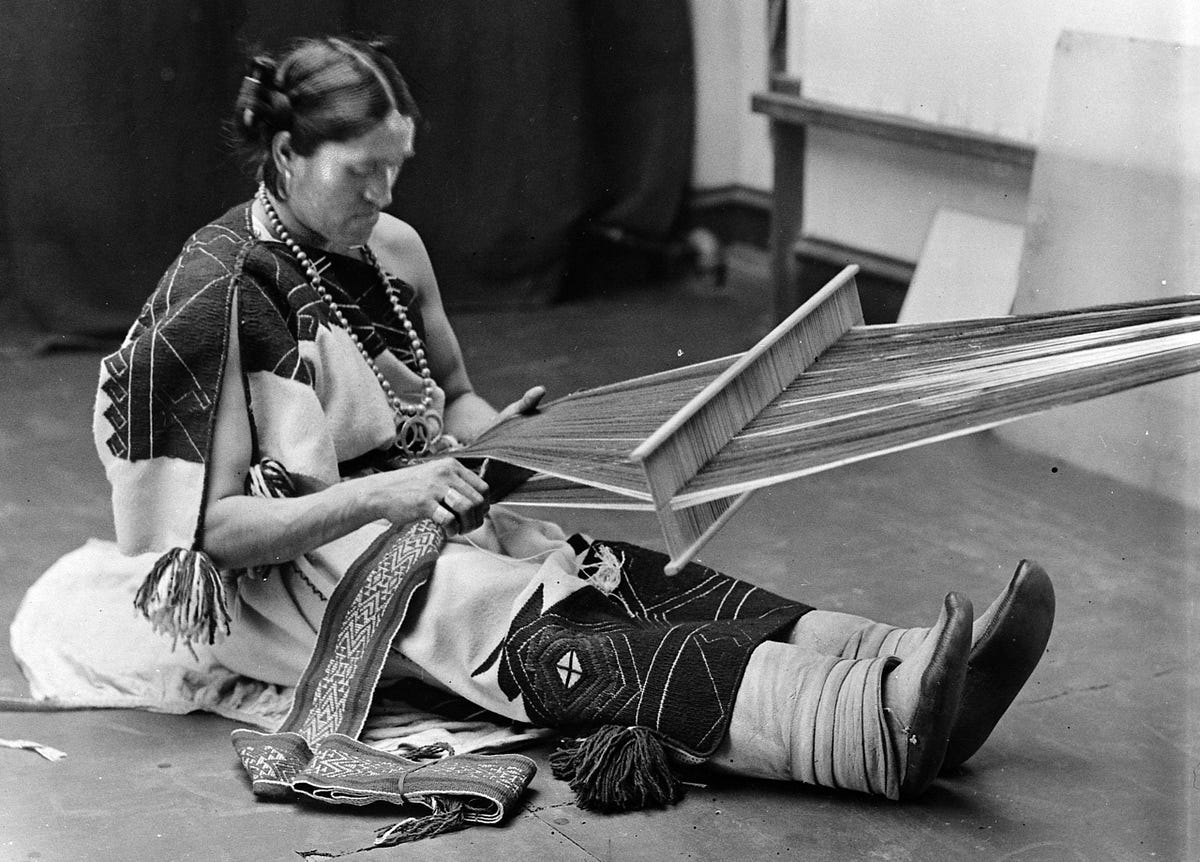
As a youth, We’wha received instruction specific to men while also training under their female relatives, learning skills for both traditionally male and female roles. They became a celebrated master of traditional A:Shiwi arts, including weaving and pottery, work that was among the first produced by an A:Shiwi craftsperson to be sold commercially, paving the way for Native American art to gain national recognition. We’wha was also a member of numerous A:Shiwi societies, including the men’s kachina society and the medicine society known as Beshatsilo:kwe (Bedbug People) after a shaman cured them of an ailment. As the most famous Lhamana on record, they served as a cultural ambassador and educator for European-American settlers, teachers, soldiers, missionaries, and anthropologists.
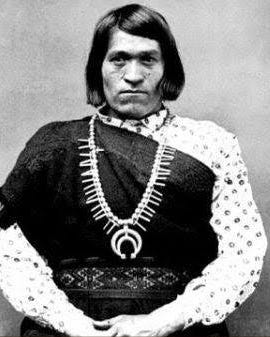
In 1879, We’wha met anthropologist Matilda Coxe Stevenson, who was on an expedition with her husband collecting artifacts and recording A:Shiwi customs for the newly formed Bureau of Ethnology. Stevenson was captivated by We’wha’s deep understanding of A:Shiwi culture and facility with English, frequently describing We’wha as “the most intelligent person in the Pueblo.”
In 1886, We’wha accompanied the Stevensons to Washington, DC, where they stayed for six months and were a sensation in high society. They met personally with President Grover Cleveland and presented him and the First Lady with a handmade wedding gift. We’wha gave presentations on A:Shiwi culture and spirituality, and was largely perceived during the visit as a cisgender woman—described in The Washington Post’s heavily exoticized coverage as a “Zuni princess” in “aboriginal costume” with “a headdress of feathers.” The capital thought it had discovered a curiosity. What it had actually encountered was a cultural authority.
While We'wha wore what the press described as an elaborate feather headdress during their diplomatic visit to the capital, this was generally an adaptation to suit the expectations of white, Eastern audiences. The traditional Plains-style warbonnet (commonly recognized as a headdress) was highly sacred and worn only by men (usually chiefs and warriors) of specific Great Plains tribes, not the A:Shiwi.
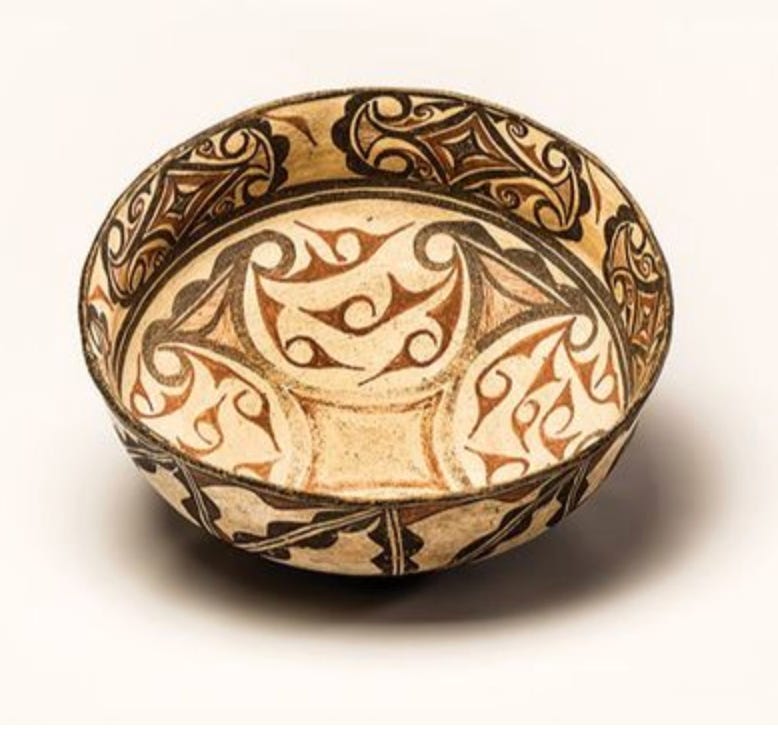
We’wha also assisted with ethnographic research for the Smithsonian National Museum, elucidating the significance of A:Shiwi artifacts, modeling for photographs to showcase weaving techniques, and contributing crafts to the museum’s collections.
Despite these contributions, the U.S. government’s efforts to assimilate Indigenous tribes intensified during the late 19th century. Later, Protestant missionaries arrived in A:Shiwi territories as part of President Grant’s “Peace Policy,” aimed at assimilating Indigenous people into American society through Christianity. During this period, the Lhamana, including We’wha, were imprisoned. After a month of fighting for their release, We’wha and other A:Shiwi Lhamana walked 40 miles back to their reservation and simply returned to their normal life of making pottery, weaving, and leading ceremonies. They would be imprisoned again for a month in 1896 for “witchcraft,” a term used to criminalize and silence Indigenous spiritual leaders who resisted assimilation or maintained traditional cultural practices.
In 1896, while participating in the sacred A:Shiwi winter solstice Shalako Festival (gift link), We’wha suffered a fatal heart attack at age 47. Stevenson, who was present, later wrote: “We’wha’s death was regarded as a calamity, and the remains lay in state for an hour or more, during which time not only members of the clans to which [they were] allied, but the rain-priests and theurgists and many others, including children, viewed them. When the blanket was finally closed, a fresh outburst of grief was heard, and then all endeavored to suppress their sobs…”
We’wha is widely celebrated today as an icon of resilience and a pioneering two-spirit figure—proof that non-binary and gender-fluid individuals held sacred, functional, and respected roles within Indigenous cultures. Their life challenges Western binary notions of gender and serves as a vital symbol of strength for modern Indigenous and LGBTQ+ communities.
Paul Elliott Russell ranked We’wha 53rd in his 1995 book The Gay 100. The National Women’s History Museum has a page dedicated to them. San Francisco’s Rainbow Honor Walk installed a bronze plaque with the inscription: “Respected Zuni Lhamana or Two Spirit, accomplished potter, weaver, and cultural ambassador of the Zuni nation.” And the Santa Fe Human Rights Alliance annually presents the “We’wha Award” to individuals who have made significant contributions to the LGBTQ community in New Mexico.
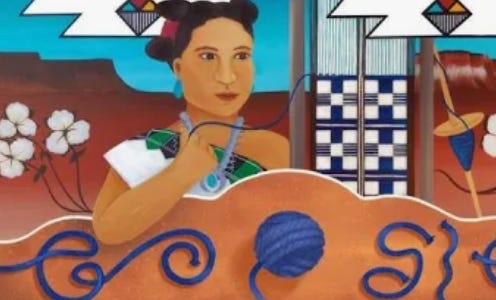
That Google Doodle appeared on November 1, 2021, featuring a weaving game and art by A:Shiwi Pueblo guest artist Mallery Quetawki, who noted We’wha’s central role in representing A:Shiwi culture and art.
Watch: The Book of Queer (2022), a docuseries on discovery+ featuring We’wha and other historical LGBTQ+ figures. Available on Amazon Prime.
Read: The Zuni Man-Woman (1992) by Will Roscoe—the definitive biography.
Also, today (June 28, 2026) marks the 57th anniversary of the Stonewall Uprising, one of several important turning points for gay liberation in the 20th century. It was not the first time police raided a gay bar, and it was not the first time LGBTQ+ people fought back, but the events that would unfold over the next six days fundamentally changed the nature of LGBTQ+ activism in the United States.
Remember, we can all burn brightly anyway.

Others in this series—30 days of LGBTQ artists, writers, and makers—are here:


Thank you for sharing these stories. I love We'Wha's story. The recognition of their value to their people is evidence of a culture that is characterized by acceptance of each individual as they are. If only we could evolve to that level.